Best NVIDIA Best Value GPUs Premium in 2026




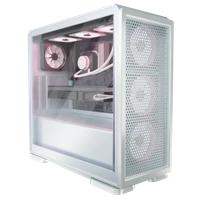

NVIDIA GeForce RTX 4080 Founders Edition 16GB GDDR6X

Great Alternatives
These options also score highly and may better suit your specific needs
NVIDIA GeForce RTX 3060 Ti 30 Series 8GB GDDR6
Why we recommend this ▼
The Ampere-based RTX 3060 Ti delivers strong 1080p and capable 1440p gaming via 4864 CUDA cores and 8GB of 256-bit GDDR6 memory. Its compact dual-fan, 2-slot design at 242mm fits easily into smaller builds while still supporting ray tracing and DLSS. This card is best for 1080p gamers wanting high refresh rates in a power-efficient 200W package.

NVIDIA GeForce RTX 3080 Founders Edition 10GB GDDR6X
Why we recommend this ▼
Built on the 8nm Ampere architecture, it delivers 30.6 FP32 TFLOPS of compute power and 10GB of GDDR6X memory with a 912 GB/s bandwidth for high-fidelity 4K gaming. The Founders Edition design offers a premium dual-axial flow-through thermal solution that keeps the 165W TDP chip cool under load. This card is best for gamers targeting high-refresh 1440p or smooth 4K experiences who want robust ray tracing performance.

NVIDIA Quadro P2200 5GB GDDR5X workstation
Why we recommend this ▼
The 1280 CUDA cores and 5GB of GDDR5X memory on the Pascal-based Quadro P2200 provide reliable compute performance for handling large models in professional 3D applications. Its compact 200mm length and 75W TDP allow it to drive four 5K displays with 30-bit color without external power connectors, fitting easily into small form factor workstations. This card is best for entry-level CAD designers and medical imaging technicians who need certified driver stability and multi-display support for ultrasound systems or FHD video editing.

NVIDIA GeForce RTX 2080 11GB
Why we recommend this ▼
The Turing-based RTX 2080 Ti stands out with 11GB of VRAM and dedicated ray tracing cores, delivering a 18647 PassMark G3D score for early real-time ray tracing at 1440p. Its Founders Edition build quality and factory-sealed condition offer a premium, collectible design that was ahead of its time. This card is best for collectors or budget-conscious builders seeking 1080p high-refresh gaming from a flagship-class GPU, though its 250W TDP and limited AI performance show its age.

NVIDIA RTX 2000 Ada 16GB GDDR6 workstation Black
Why we recommend this ▼
The 4nm Ada Lovelace GPU delivers 2816 CUDA cores, 16GB of ECC GDDR6 memory, and 12 FP32 TFLOPS in a 70W TDP, making it a low-power workstation card that fits in compact 168mm dual-slot builds. Its 4x DP 1.4a outputs, AV1 encode, and ray tracing support add versatility for multi-display and content creation workflows, while the blower design suits dense systems. Best for professionals running CAD, simulation, or AI inference tasks that need ECC reliability and quiet operation in a small form factor workstation.

NVIDIA RTX A1000 8GB GDDR6 workstation Black
Why we recommend this ▼
Built on the 8nm Ampere architecture, this single-slot card delivers 6.7 FP32 TFLOPS of compute power from 2304 CUDA cores within a strict 50W TDP, making it ideal for compact workstations. Its 8GB of GDDR6 memory and four Mini DisplayPort 1.4a outputs natively drive quad 5K or dual 8K displays for expansive visual workspaces. This card is best for 3D modelers and video post-production artists who need certified reliability and multi-display support in a small form factor system.
