Best Workstation GPUs Premium in 2026




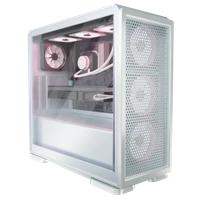

ASUS GeForce RTX 5090 ROG Matrix 32GB GDDR7 Black

Great Alternatives
These options also score highly and may better suit your specific needs
Gigabyte GeForce RTX 5090 AORUS Xtreme Waterforce 32GB GDDR7 Black
Why we recommend this ▼
The Blackwell-based RTX 5090 with 21,760 CUDA cores and 32GB of GDDR7 on a 512-bit interface delivers top-tier 4K gaming and AI performance, with a PassMark G3D score of 38,845. Its WATERFORCE AIO liquid cooler keeps the 430W TDP in check within a compact 245mm, 2-slot design, while the metal backplate and RGB lighting add durability and style. Best for enthusiasts building a high-end 4K gaming rig or running large AI models who want liquid cooling without sacrificing case compatibility.

AMD Radeon PRO W7900 48GB GDDR6 workstation Blue
Why we recommend this ▼
The RDNA 3 chiplet design delivers 61 TFLOPS and 48GB of GDDR6 on a 384-bit bus, with DisplayPort 2.1 supporting up to 12K120 output. Its blower cooler and 295W TDP fit multi-GPU workstation builds, while ECC memory and AV1 encode cover professional reliability and media tasks. Best for 3D artists and engineers running high-polygon models and compute workloads concurrently, though budget buyers should look elsewhere.

ZOTAC GeForce RTX 5090 AMP Extreme INFINITY 32GB GDDR7 Gray
Why we recommend this ▼
The 21760 CUDA cores and 32GB of GDDR7 memory on the Blackwell architecture deliver top-tier 4K gaming at 89.6/100, backed by a 34% larger vapor chamber and IceStorm 3.0 cooling to manage the 600W TDP. Its distinctive infinity mirror design and reinforced mid-frame provide a premium build quality that stands out in any high-end rig. This card is best for 4K gamers and ray-tracing enthusiasts who prioritize maximum frame rates and visual fidelity above all else.

Gigabyte GeForce RTX 5090 WINDFORCE OC 32GB GDDR7 Black
Why we recommend this ▼
The 21,760 CUDA cores and 2467MHz boost clock on the Blackwell RTX 5090 deliver top-tier 4K gaming and AI performance, backed by 32GB of GDDR7 memory on a 512-bit interface. The triple-fan WINDFORCE cooling keeps the 575W TDP in check, while DLSS 4 and AV1 encoding add value for creators and gamers alike. Best for enthusiasts running 4K ray-traced titles or local LLM workloads who need the fastest consumer GPU available.

ASUS GeForce RTX 4090 ROG Strix OC 24GB GDDR6X Black
Why we recommend this ▼
The 16384 CUDA cores and 2640MHz boost clock deliver top-tier 4K gaming performance, with 24GB GDDR6X memory and 576 GB/s bandwidth handling the most demanding titles. Its 3.5-slot design with Axial-tech fans provides 23% more airflow, while the diecast shroud and backplate add rigidity and improve heat dissipation. Best for enthusiasts who want maximum ray tracing and 4K performance, scoring 93.2/100 in ray tracing and 91.9/100 in 4K gaming.

ASUS GeForce RTX 5090 ROG Astral OC 32GB GDDR7
Why we recommend this ▼
The 2610MHz boost clock and 21760 CUDA cores on the RTX 5090 Blackwell chip deliver top-tier 4K gaming, backed by 32GB GDDR7 on a 512-bit bus and a 360mm AIO liquid cooler with a full-coverage copper plate for quiet operation. The triple-slot design supports 7680 x 4320 resolution via DisplayPort 2.1b and HDMI 2.1b, making it a strong pick for high-refresh 8K output. Best for enthusiasts building a premium 4K or 8K gaming rig who prioritize ray tracing and DLSS performance over workstation tasks.

PNY GeForce RTX 5090 50 Series 32GB GDDR7 Black
Why we recommend this ▼
The 21760 CUDA cores and 32GB of GDDR7 memory on a 512-bit bus deliver a PassMark G3D score of 38845, making this the fastest consumer GPU for 4K gaming and AI workloads. Its triple-fan cooler and 3.5-slot design handle the 600W TDP, while DLSS 4 and full ray tracing provide visual fidelity that older cards cannot match. Best for enthusiasts building a top-tier 4K gaming rig or running local LLMs, though the 329mm length and 1000W PSU requirement demand a spacious case and robust power supply.

MSI GeForce RTX 4090 24GB GDDR6X Black
Why we recommend this ▼
The Ada Lovelace RTX 4090 with 9728 CUDA cores and a 2595MHz boost delivers top-tier 4K gaming, scoring 92.2/100, while the TRI FROZR 3 cooling with TORX FAN 5.0 keeps it quiet under load. Its 24GB GDDR6X memory and AV1 encode also make it a strong pick for content creation, though workstation tasks score lower at 79.6/100. Best for gamers and creators who want maximum ray tracing performance at 1440p or 4K and are willing to pay for it.

ASRock Radeon RX 7900 XT Phantom Gaming 20GB GDDR6
Why we recommend this ▼
The RDNA 3 5nm chip with 5376 stream processors and a 2450MHz boost clock delivers 61.4 FP32 TFLOPS, backed by 20GB of GDDR6 on a 320-bit bus for 960 GB/s bandwidth. The Phantom Gaming 3X cooling system with striped ring fans and a reinforced metal frame keeps the 300W TDP in check, while 0dB silent cooling stops fans entirely under light loads. This card suits gamers targeting 4K and ray tracing workloads, scoring 87.7/100 for ray tracing, though AI LLM tasks at 72.9/100 are its weakest area.

PowerColor Radeon RX 7900 XTX RED DEVIL OC 24GB GDDR6
Why we recommend this ▼
The 24GB GDDR6 384-bit memory and 2565MHz boost clock deliver 61.4 FP32 TFLOPS, making this RDNA 3 card a top-tier choice for 4K gaming and AI workloads, with a 355W TDP and triple-fan cooling for sustained performance. Its 4-slot design and 338mm length require a spacious case, but the 4.4/5 rating from 371 reviews reflects reliable build quality and effective thermal management. Best for enthusiasts running 4K AAA titles or local LLM inference who need maximum VRAM and compute throughput, though 1080p gamers will find better value elsewhere.

MSI GeForce RTX 5090 SUPRIM 32GB GDDR7
Why we recommend this ▼
The 32GB GDDR7 memory on a 512-bit bus and 21,760 CUDA cores with a 2580MHz boost clock deliver extreme throughput for 4K gaming and AI workloads. Its Hyper Frozr cooling with a vapor chamber manages the 600W TDP effectively, housed in a premium, rigid build that runs quietly under load. This card is best for AI researchers running large language models and enthusiasts demanding maxed-out 4K ray tracing performance.

ZOTAC GeForce RTX 4080 AMP Extreme 16GB GDDR6X
Why we recommend this ▼
The 9728 CUDA cores and 2565 MHz boost clock deliver top-tier 4K and ray tracing performance, backed by 16GB GDDR6X memory and a 320W TDP. Its IceStorm 2.0 cooling with three 110mm fans and dual BIOS keeps noise low, while the 356mm length requires a spacious case. Best for enthusiasts building a high-end gaming rig focused on 1440p and 4K ray tracing, not for AI workloads.

NVIDIA Quadro RTX 6000 24GB GDDR6 workstation
Why we recommend this ▼
Combining 24GB of GDDR6 memory with the Turing-based Quadro RTX 6000 chip delivers certified reliability for demanding ISV applications. Its dedicated RT Cores accelerate ray tracing and AI-enhanced workflows in a single-slot, power-efficient design. This card is best for data scientists running large in-memory AI model training and engineers requiring guaranteed compatibility with professional CAD and simulation software.

ASUS GeForce RTX 5090 ROG XG Mobile 24GB GDDR7
Why we recommend this ▼
Delivering desktop-class GeForce RTX 5090 performance with 24GB of GDDR7 memory through a 120Gbps Thunderbolt 5 connection, this 2.09-pound external GPU enables triple 4K 144Hz display setups. Its redesigned vapor chamber offers 150% more cooling surface area while a new MOSFET design cuts weight to maintain a 330W power profile in a highly portable chassis. This dock is best for AI developers and LLM researchers who need massive 24GB VRAM acceleration on the go.

NVIDIA GeForce RTX 5080 16GB GDDR6
Why we recommend this ▼
The Blackwell architecture and 16GB of GDDR6 memory deliver 56.3 FP32 TFLOPS and 1801 TOPS of AI compute, enabling smooth 4K gaming with DLSS 4. Its 150W TDP and PCIe 5.0 x16 interface provide efficient, high-bandwidth connectivity for multi-display 8K setups. This card is best for gamers prioritizing high-fidelity ray tracing and AI-upscaled performance at 4K resolution.
